Estate Planning Lawyer
What is Estate Planning?
Estate planning is the act of preparing for the transfer of a person’s wealth and assets after his or her death. Estate planning is for everybody, not just the wealthy. Without an appropriate estate plan, your family can spend a lifetime (and their life savings) battling over your assets.
According to a caring.com survey, only 42 percent of U.S. adults have estate planning documents such as a will or living trust. For those with children under the age of 18, the figure is even lower, with just 36 percent having an end-of-life plan in place.
Reasons to have an estate plan
Some of the main reasons why you should get involved in planning your estate are:
- Preserving family wealth,
- Providing for surviving spouse and children,
- Funding children and/or grandchildren’s education, and
- Leaving your legacy behind to a charitable cause.
Steps in estate planning
The most basic step in estate planning involves writing a Will. In addition to this, the other important estate planning tasks include:
- Limiting estate taxes by setting up trust accounts in the names of beneficiaries
- Establishing a guardian for living dependents
- Naming an executor of the estate to oversee the terms of the will
- Creating/updating beneficiaries on plans such as life insurance, IRAs, and 401(k)s
- Setting up funeral arrangements
- Establishing annual gifting to qualified charitable and non-profit organizations to reduce the taxable estate
- Setting up a durable power of attorney (POA) to direct other assets and investments
Why do you need an Estate Planning Lawyer?
- Revocable living trusts
- Last will and testament
- Powers of attorney
- Health care proxies
- Integrated estate planning
- Estate planning for LGBT
- Irrevocable Trusts
An out-of-date estate plan is an ineffective estate plan. In order for your plan to be at its best, it is essential that your plan reflect your current life – representing your current marital situation, immediate and extended family, choices of executors, beneficiaries, and other notable persons, and with a current accounting of all accounts and important assets. In addition to creating your plan, we’ll work with you through the years to keep your plan updated. You never know when things in your life will change, and the attorneys at KLG value open and frequent conversations with all clients to ensure the estate plan’s level of completion.
While it’s important that your estate plan assist you when you’re gone, you also want your estate plan to effectively set boundaries and standards for your life while alive. An estate plan can establish care for you or other family members, the continuity of charitable giving interests, life insurance and other necessary items. Additional estate planning tactics include:
- Educational trusts
- Dynasty trusts
- Life insurance trusts
- Special Needs trusts
- Asset Protection trusts
Remember, security begins with a plan.
Learn more about the 10 Common Estate Planning Mistakes to Avoid
Our Estate Plans
Simple Estate Plan
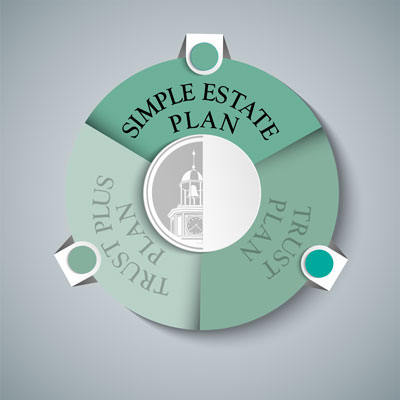
For the Individual or Family Who…
is looking for assurance that their property is distributed according to their wishes, that their minor children are well cared for, that their health care wishes turn into directives and that their loved ones are able to access their assets if they become incapacitated.
The Simple Estate Plan Includes:
- A Last Will & Testament
- Health Care Proxy
- Durable Power of Attorney
- Living Will
- HIPAA Release and Declaration of Homestead (if applicable).
This plan provides instructions on the distribution of your property, but does not include a trust or avoid Probate Court.
Trust Plan
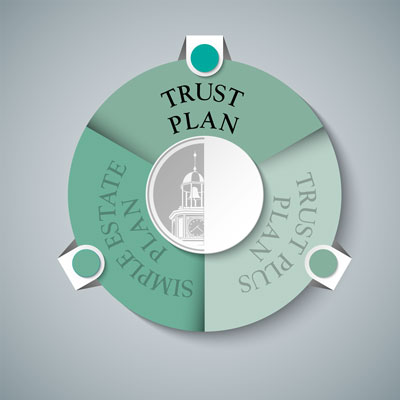
For the Individual or Family Who…
is looking for assurance that their property is distributed according to their wishes, that their minor children are well cared for, that their health care wishes are turned into directives, that their loved ones are able to access their assets if they become incapacitated and that their assets will be transferred privately to heirs with the most ease and convenience possible without Probate Court involvement and expense. The Trust Plan may also help save on estate taxes.
The Trust Plan Includes:
- A Revocable Trust
- Last Will & Testament
- Health Care Proxy
- Durable Power of Attorney
- Living Will
- HIPAA Release
- Real Estate Deed and Declaration of Homestead (if applicable).
All asset transfers into your trust will be handled by you with support and guidance from our office.
Trust Plus Plan
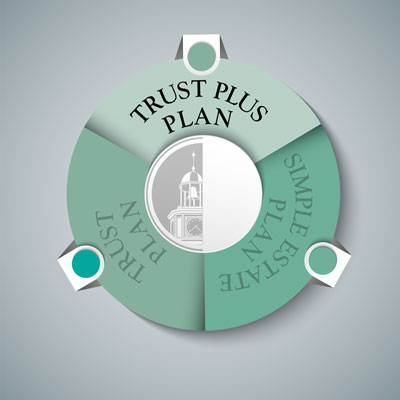
For the Individual or Family Who…
is looking for assurance that their assets will be transferred privately to heirs with the most ease and convenience possible without Probate Court involvement and the comfort of knowing that asset transfers are handled by our office.
This plan is ideal for busy individuals or families who want the asset transfers into their trust handled for them.
The Trust Plus Plan Includes:
- A Revocable Trust
- Last Will & Testament
- Health Care Proxy
- Durable Power of Attorney
- Living Will
- HIPAA Release
- Real Estate Deed and Declaration of Homestead (if applicable).
All asset transfers into your trust will be handled by our office.
Estate Tax Planning in Massachusetts and New Hampshire
Massachusetts charges its own estate tax on estates over a set exemption amount, separate from the federal estate tax. New Hampshire, by contrast, has no state estate tax at all.
That difference matters for families who own property or split their time between the two states. Where you’re legally a resident when you pass away, and where your real estate is located, can change what your estate owes. A trust doesn’t automatically avoid Massachusetts estate tax, but certain trust structures, lifetime gifting, and marital planning can reduce or eliminate an estate’s exposure.
Because these thresholds and credits are set by state law and can change, we review your plan against the current Massachusetts and federal rules every time we update it for you.
Special Needs Planning
If you have a family member with a disability who receives government benefits like SSI or Medicaid, a special needs trust lets you leave them an inheritance without putting those benefits at risk. Money left directly to a person with a disability can reduce or eliminate their eligibility for means-tested programs. A properly drafted special needs trust holds assets separately, so they can be used to improve that person’s quality of life without affecting benefits they already rely on.
We work with Massachusetts and New Hampshire families to set up special needs trusts, either as a standalone document or as part of a larger estate plan, and to coordinate them with any government benefits the beneficiary already receives.

Frequently Asked Questions
Why do you need an estate plan?
What constitutes your estate / assets?
Your estate consists of your assets, meaning everything you own at the time of your death. While everyone’s estate is different, these items may include:
- House/real estate.
- Bank accounts.
- Stocks and other securities.
- Life insurance policies.
- Pensions.
- Personal property and belongings such as automobiles, jewelry, artwork, etc.
Why is it important to have an estate plan?
What documents go into an estate plan?
-
Last Will and Testament
A last will and testament is a written legal document that states how you’d like your property and assets distributed after your death, whether it’s to charity, family and friends, or even pets. It also designates a Personal Representative who will collect all of your assets, manage your estate, and ensure your specifications are carried out as per your wishes. -
Health Care Proxy & Living Will
When you create a health care proxy, you designate a healthcare agent to make important decisions regarding your healthcare when you are unable to do so. A living will is a document that states your wishes regarding medical care in the event that you become terminally ill or incapacitated. -
Power of Attorney
A power of attorney is a document that allows you to designate someone to manage the affairs of your estate, including financial decisions, if you are unable to manage them yourself. -
Revocable Trust
Each trust has a settlor (person who creates the trust), a trustee (person in charge of trust assets) and a beneficiary (person who benefits). With a revocable trust, the settlor transfers assets to the trust, the trustee manages them, and the beneficiary eventually inherits them. -
HIPAA Release
A HIPAA Release is a document that allows you to designate someone who will be able to request and obtain your medical records. -
Declaration of Homestead
A Declaration of Homestead can help protect your home from claims of unsecured creditors.
How do you determine what type of estate plan a person needs?
Why Choose KLG Estate Planning & Probate Attorneys?
What should I expect at my first appointment?
During your first appointment, you should expect to meet with a kind and knowledgeable attorney who is ready to advise you and help you protect your cherished assets. After getting to know each other, we discuss the dangers of not creating an estate plan, clearly addressing the “what ifs” and identifying the risks your family could face without having a plan in place. From there, we listen to your goals and objectives and assist you in deciding what plan works best for you. We’ll further discuss the process and the documents you would need, providing pricing and the timeframe for completion.